


Long before the great novelist Leo Tolstoy described the existence of unhappy families (“happy families are all alike; every unhappy family is unhappy in its own way”), the Torah, especially in the book of Genesis, recorded how the relationship between parent and child is both the toughest and most tenuous of bonds.
And nowhere is this more trenchant than the terrifying story of the Akeida, the binding of Isaac and his near sacrifice by his father Abraham. It’s as frightening as it is fundamental to our tradition. It’s puzzling and it’s paradoxical: throughout the centuries, Judaism has been the great child centred civilisation. When the Torah tells us why Abraham was chosen as the first Jew – “so that he will instruct his children and his household after him to keep the way of the Lord”. In other words, Abraham was chosen for the sake of his children. Yet a few years (or possibly decades) after the birth of his beloved son, he’s ready to sacrifice him.
While the story is truly an enigma wrapped in a riddle, it does have layers of meaning that we can try and unravel, and that have significance for us today.
For me, there are at least three heartbreaking words (in the Hebrew) that leap out of the story: וילכו שניהם יחדו – and the two of them walked together. Twice on their way up the mountain, where the sacrifice will take place, we are told that Abraham and Isaac “went along, both of them, together”. It’s a poignant expression of closeness, of intimacy, of togetherness, of unity, of purpose. They are both part of God’s dastardly challenge, they both collude. According to one Rabbinic commentary or Midrash:
While Abraham was building the altar, Isaac kept handing him the wood and the stones. Abraham was like a man who builds the wedding house for his son, and Isaac was like a man getting ready for the wedding feast, which he does with joy.
While the relationship between father and son depicted here is astonishing, its perverse celebration of death runs counter to everything we know and expect of Judaism. We, after all, pride ourselves as a culture that affirms life. To life to life LeChaim! …
But perhaps that is precisely the message of this mystery. Isaac was never meant to die and he becomes the very model of a survivor, one who has looked death in the face with laughter. After all, his name means man of laughter. He dances to the end of love. And he lives to tell the tale!!
Leonard Cohen perhaps got to the nub of it when he wrote: “you who build the altars now to sacrifice your children you must not do it anymore. A dream is not a vision, and you have never been tempted by a demon or a God”.
Yet today, both parents and children are tempted by demons and perhaps challenged by God. Children have become the targets of our age, exploited mercilessly by influencers and algorithms. We know that the rates of depression and anxiety in adolescence are in hyperdrive and seeping down into childhood. Australian emergency admissions for self harm in girls aged 10 to 14 has more than tripled since 2009.
There’s a crisis of masculinity in young men who are brutally exploited by ruthless influencers. The Netflix series ‘Adolescence’ is a chilling exploration of how boys are influenced by viewing harmful online content, which is often misogynistic and has led to fatal consequences.
Rose Thomas began interviewing Australian teenagers approximately a year ago on how they feel about themselves on social media. One 10 year old blithely told her that he’s “super addicted to porn and funny racist reels”.
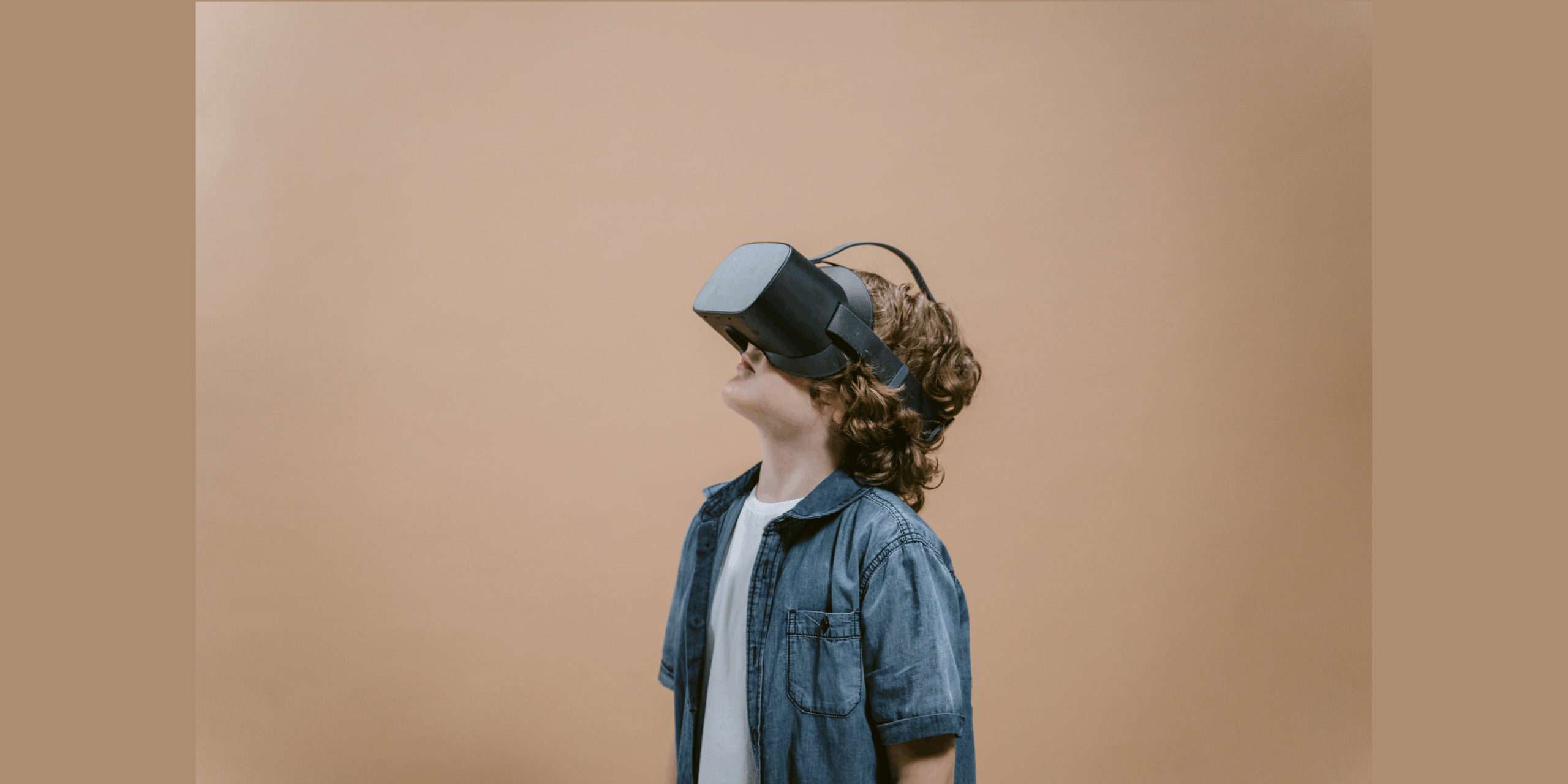
And, to use just one other example, children and teenagers across the world are being enticed by AI chatbot companions who aren’t just disembodied voices, but have features and so-called memory and soul. They present themselves as characters with feelings and opinions. An Australian researcher recently reported on how he posed as a 15-year-old having problems with his father. In the course of the conversations his companion then urged him to kill his father.
The data is grim. Our kids are not okay and most teenagers recognise and admit that they feel paralysed by it, reports Thomas. Says 16 year-old Miah: “to have something so entertaining just sitting there next to you, you know, begging for your attention – it’s like a drug and there’s not a lot of reasons to shut it out of your life because absolutely everyone is stuck to their phones – your one source of information, it’s how you communicate with friends”. Thompson titled her article ‘Generation Regret’.
From the story of Abraham we should learn that we can still halt the madness, that it’s possible to break the cycle of abuse and turn regret into results and renewal.
It is not too late for us to cross the generational gap, to restore security and safety for the next generations. Jonathan Haidt is a passionate advocate for this. He is campaigning for parents to delay giving their children smart phones until they are 15 or 16. Jack Thorne who wrote adolescence says “I won’t give my son a smart phone until he’s 14”. Haidt also urged parents to give their children more independence in the real world. He says if you send your kids out at age 10 with a smart phone they’ll walk around staring down at their phone. But if you send them out with basic phones, they won’t, they’ll play. If you have entirely phone free schools, they’ll play and get used to being without a phone. His extensive research shows a surprising consistency of regret among parents and among the young adults who went through puberty on smart phones. Most of the parents are nearly half of the young adults who wish that the major social media platforms had never been invented. Vayeilchu – they are walking together.
Australia is leading the way through our eSafety Commission into controlling / banning the use of smart phones. In the UK some 35,000 families have already signed a pact to withhold smart phones until the kids are at least 14.
It is not too late my friends to build a better world. It’s about parents reaching out to their kids and knowing what they are doing on social media in their rooms. And it’s about children discovering the joy of natural play and risk taking in the real world. It’s about adolescents speaking to their peers rather than texting them or talking to a comfortable bot. It’s about schools and governments leading the way.
Says the Talmud: get yourself a real friend, find yourself a real teacher. And as the Mishnah teaches, place yourself in a village or community…
Chavruta or Mituta, as the Talmud says: get yourself a real friend, find yourself a real teacher. And place yourself in a village or community that says the Mishnah, because that’s what it takes to raise a vital child. And, in Halachik language, it’s a responsibility that parents have to teach and rear their children well. The Mishnah records we need to give our children life skills (like a trade) so they can become independent practically, morally, and intellectually. In my mind this extrapolates to teaching them the skills of self preservation based on the Biblical verse “and guard your souls”. After all, if the Mishnah requires us to teach them how to swim, surely we should teach them how to navigate the treacherous tides of our social media sea?
There are cultures that live in the present only. Eventually, inevitably, they lose their way. There are cultures that live in the past. Hanging onto their grievances and victimhood, they seek revenge. Judaism is a supreme example of a culture that, while celebrating the present and honouring the past lives for the future, it lives for its children. Says Rabbi Jonathan Sacks: if I were to choose one Jewish message for the world in these tense times, I would say: “forget power, pride, violence, revenge, wealth, prestige, honour – and instead ask: will our next act make the world a little better for our children”.
This is the urgent message for our times and for the future.
Rabbi Ralph Genende



Lech Lecha (Chapter 12 – Genesis)