
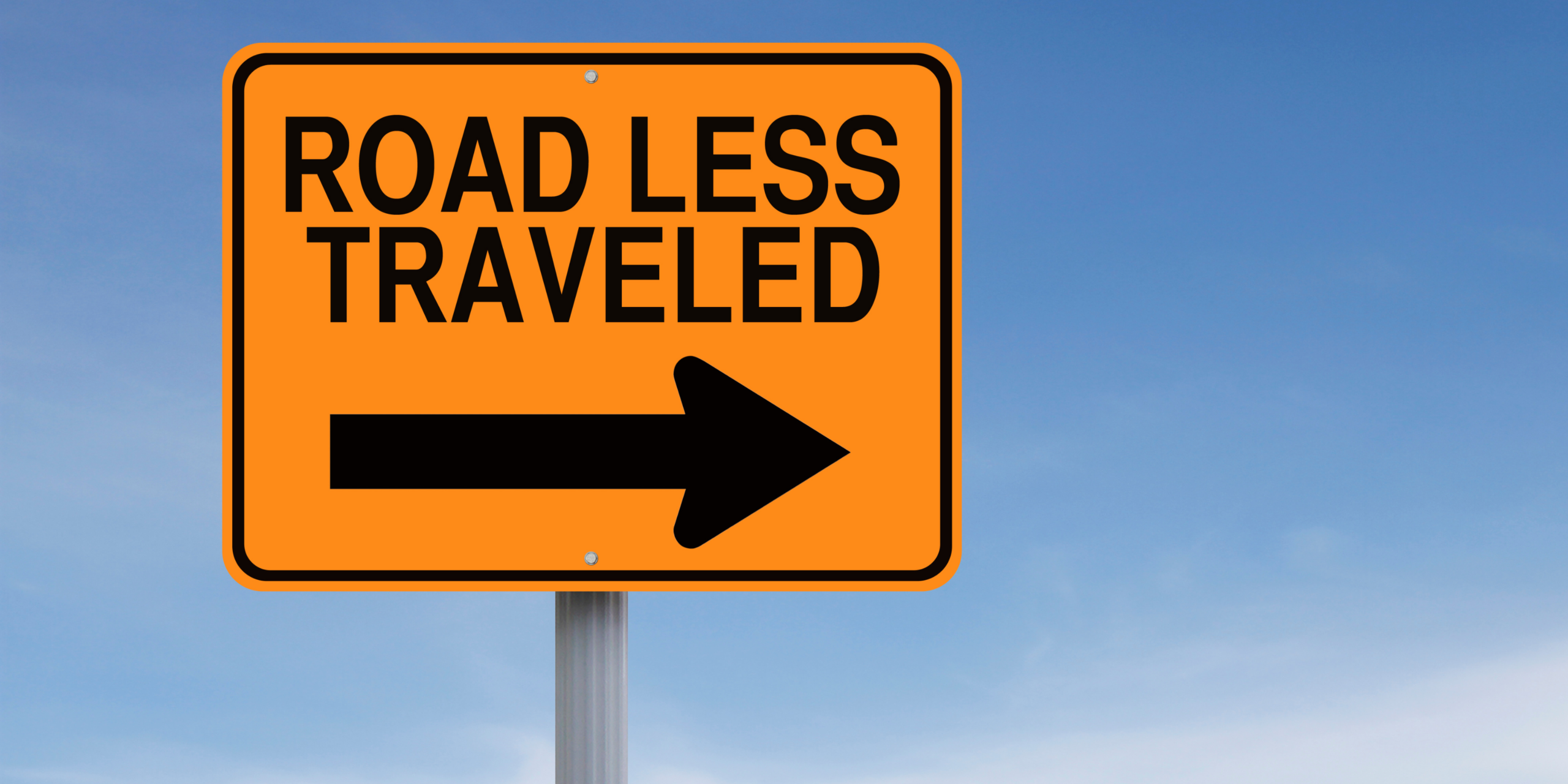

Over the past month, I’ve often reflected on taking the road less travelled. I’ve written about it and spoken about it on video, yet I still feel there is more to say. I’m thinking of Robert Frost’s famous poem, where the traveller reaches a fork in the woods and must choose between two paths. Wishing he could take both, he chooses the one less travelled – and, as he says, that has made all the difference.
On our journey through life, we are faced with so many choices. You can’t usually go back once you’ve chosen a path because life simply moves on in its inexorable way. Most of us prefer to take a path well-trod – it’s safer, it’s more comfortable… It takes courage to be a pilgrim, to set off on a journey that few others have taken.
Perhaps it’s only the courageous and the unhinged who make those kinds of decisions…
When I agreed to spend three weeks travelling together with a Christian priest and an Imam, firstly in the Philippines (a place I had never imagined visiting), then in Indonesia with the Imam, Niki, from the world’s largest Muslim-majority country, which has no relationship with Israel, and finally when I welcomed them into my home in Melbourne, I wondered whether I was being wildly impulsive or simply showing my age. I did not feel particularly brave.
When I arrived at the airport in Manila, one of the few white faces in the terminal, I noticed a tiny bird lost in the vast space. I felt a little like that bird. It struck me then that this is what being Jewish can feel like today: we are so small in number, like a grain of sand on the beach of humanity, tiny travellers adrift in a vast and indifferent world. There is one difference: no one seemed to notice the bird, but everyone seems to notice Jews. Can you imagine a week passing without some reference to Jews or Jewish life in the news or on social media? At times it feels as though, without Jews, there would be far less to talk about. No Jews, no interesting news! I think of what Tevye (the character from Fiddler On the Roof) would say: Chosen people, can’t you choose someone else for a change?
It is no surprise, then, that many Jews today prefer to hide their Jewishness. Being Jewish in Australia now feels unnerving, unsettling, bewildering, and often frightening. The lucky country no longer feels quite so lucky.
So is it brave or foolish to take the Road Less Travelled?
I think it’s not a journey for everyone, and for some it can be quite dangerous. Extremists often choose to see themselves as brave challengers of the accepted order. The wild and dangerous settlers of the West Bank probably view themselves as outrageous pilgrims going where the angels fear to tread.
But that’s about a group of individuals, but what about a nation, a people? Are we the Jewish people sojourners on that path less trod? Do we go where the angels fear to go?
I think it’s in our genes to be the provocateurs, challenging convention, questioning authority, inventing new ways, initiating new inventions. From Nobel prize winners to start -up nations, we just can’t help being purveyors of the new and creators of the news. It does win us admirers, but it also stirs up envy, animosity, and hatred. And in uncertain times when people are yearning for certainty and predictability, our unusual and unpredictable ways are going to draw an even more passionate hatred. And, of course, tyrants and authoritarian leaders are most frightened of us.
Perhaps we can blame Abraham, about whom we read a great deal about on Rosh Hashana. His world was not a welcoming one. When he and Sarah chose to walk the road less travelled, they met with suspicion, hostility, hatred, and jealousy – and, in doing so, gave birth to antisemitism. Abraham was known as the Hebrew, a word associated with being “the other”, because, as the Midrash teaches, he had the courage to stand apart: on one side, while the rest of the world stood on the other. Strong as he was, Abraham chose the power of ideas over the idea of power. He spoke of justice, chose compassion over consumerism, and hospitality over hostility, and even challenged God. Then, in an act that confounded the world – and perhaps even himself – he bound his son Isaac to the altar.
So what does that mean for us Jews today? I think it means we need to embrace our otherness and celebrate our capacity to be among the original pilgrims of the road less travelled, to see what we have to give the world is a sense of adventure, as well as a dynamic and challenging intellectual and social history. We have to remind them that the more they hate us, the stronger we become. That’s why hard-boiled eggs feature in our customs. The more you boil the egg, the harder it becomes; the more you oppress us, the more cussed and damnable we become! Earlier this year, Brett Stephen proclaimed that we have the honour of being hated by the best and the worst, by the Tucker Carlson’s and by the Richard Flanagan’s.
Let’s not waste our limited energy and resources on trying to convince our detractors of the foolishness and idiocy of their beliefs and their ways. Less honey cake and more maror. Let’s spend less on antisemitism and Holocaust education (although both are important), and spend more on pro-Jewishness. Let’s learn more about who we are and care less about who they think we are or should be. Let’s be proud walkers on the Road Less Traveled.
Please do not think that choosing this path means we are condemned to loneliness. It was one of our enemies, Bilaam, who said we are a people who dwell alone. But we do not live alone. We have always been part of society, and we have long affirmed, with John Donne, that no person is an island, entirely unto themselves.
“Every man is a piece of the continent,
I am involved in mankind.”
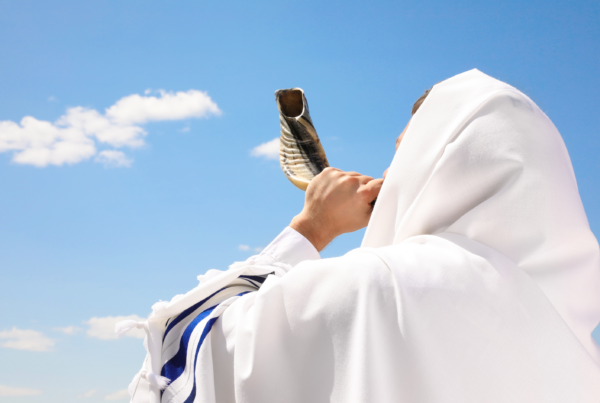
And therefore, never send to know for whom the shofar blasts
It tolls for thee.
We are all part of a wider society. We have many friends, we have many allies, we have many supporters here in Australia. I’m not going to count the vituperative hits on social media when I can count on real friends in the real world.
That was my experience over the three weeks of my interfaith journey. We three met as strangers; we departed as friends. This journey on a road rarely travelled has made all the difference not just to us, but hopefully to all who we will continue to meet on our life travels. I will write more about this.
Robert Frost wrote another poem about his journeying through the woods. In this one, he stops by the woods one snowy evening together with his horse. He pauses, reflecting that his horse must feel it strange to stop by the woods on that cold and stormy evening.
He would love to stay, comments Rabbi Sacks, here in this timeless moment, this eternity-in-an-hour. But he knows that life demands action, not just contemplation. He has promises to keep; he has duties toward the world. Therefore he must walk on despite his tiredness. He has miles to go before he sleeps: he has work to do while the breath of life is within him. As he writes:
The woods are lovely, dark and deep.
But I have promises to keep,
And miles to go before I sleep.
And miles to go before I sleep.
The poet has stopped briefly to enjoy the dark wood and falling snow. He has encamped. Yes, there are moments when we should, indeed must, pause to see the beauty of the world; but then we must move on, for we have promises to keep, including the promises to ourselves and to God. When we don’t stop, we burn out; when we don’t embark on the journey, we don’t grow. Life is growth.
So let’s stay on the road less travelled with poise and pride, with hope and confidence.


A most beautiful and wise article.
I would love you to be a guest speaker for our WIZO group in 2027.
Chag Sameach to you and Caron and your whole family,
Shan Tova, Shirley and Peter Urban